Welcome to the second part of my conversation with Fangzhou Lou. In the first part, he explained how he became a birder. Here, he discusses his photographic style, birds and the environment, and the influence birding has had on his life.
Photography: from Moments of Flight to a personal style
Aidan: Was there a particular photograph that changed the way you think about bird photography?
Fangzhou: Not one specific photograph. A book I returned to often was Moments of Flight, published by National Geographic in two volumes. I read the first volume most often. I encountered it early, when I had little understanding of bird photography and simply wanted to capture a bird clearly. The book showed me how beautiful bird photography could be and had a major influence on both my approach and my aesthetic sense. I still remember two images. One was a Solitary Snipe photographed at Huanhua Stream in Chengdu. I knew almost nothing about the species then and may never have seen one. It stood on a moss-covered rock in the stream, looking back over its shoulder. The setting and the bird were both beautiful, and I have loved Solitary Snipes ever since. The other was a Black-throated Loon in breeding plumage with its wings half open, photographed from a low angle. It may not seem technically difficult now, but it left a deep impression on me. Another early influence was the WeChat account of an experienced Beijing bird photographer, Yini. I read through years of his posts. Those were probably my two biggest early influences.
Aidan: Did you eventually develop a style of your own?
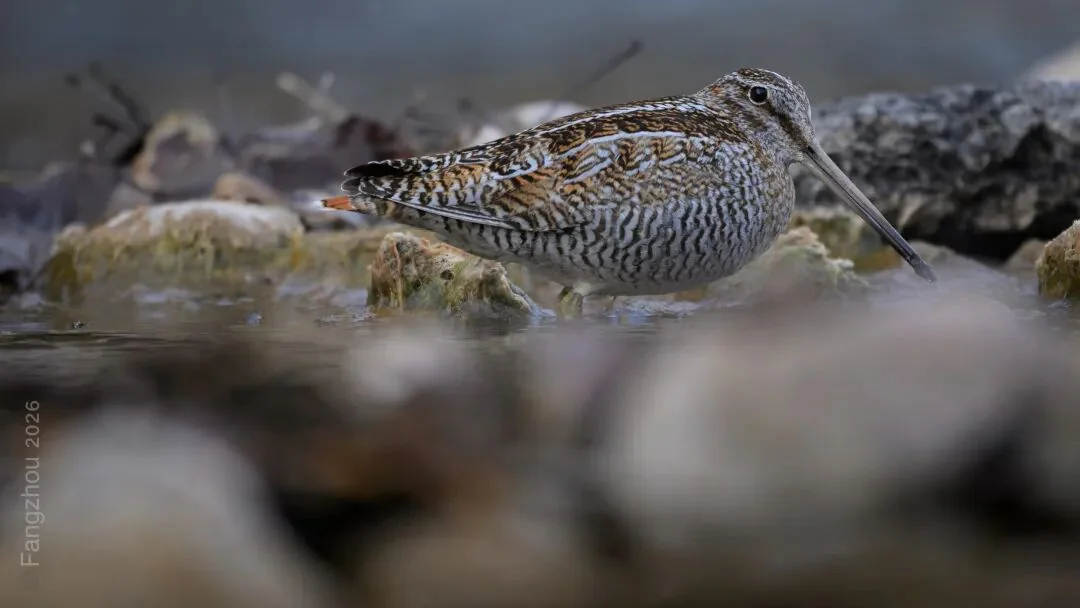
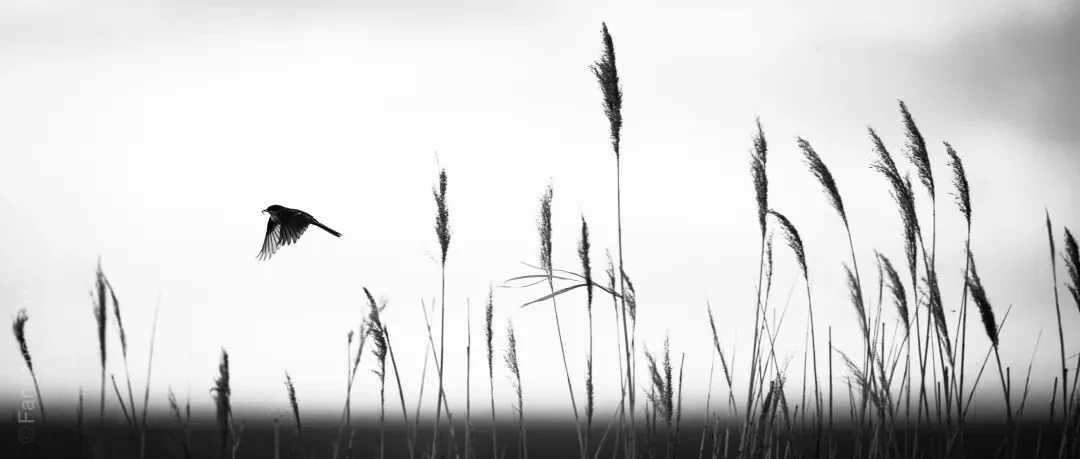
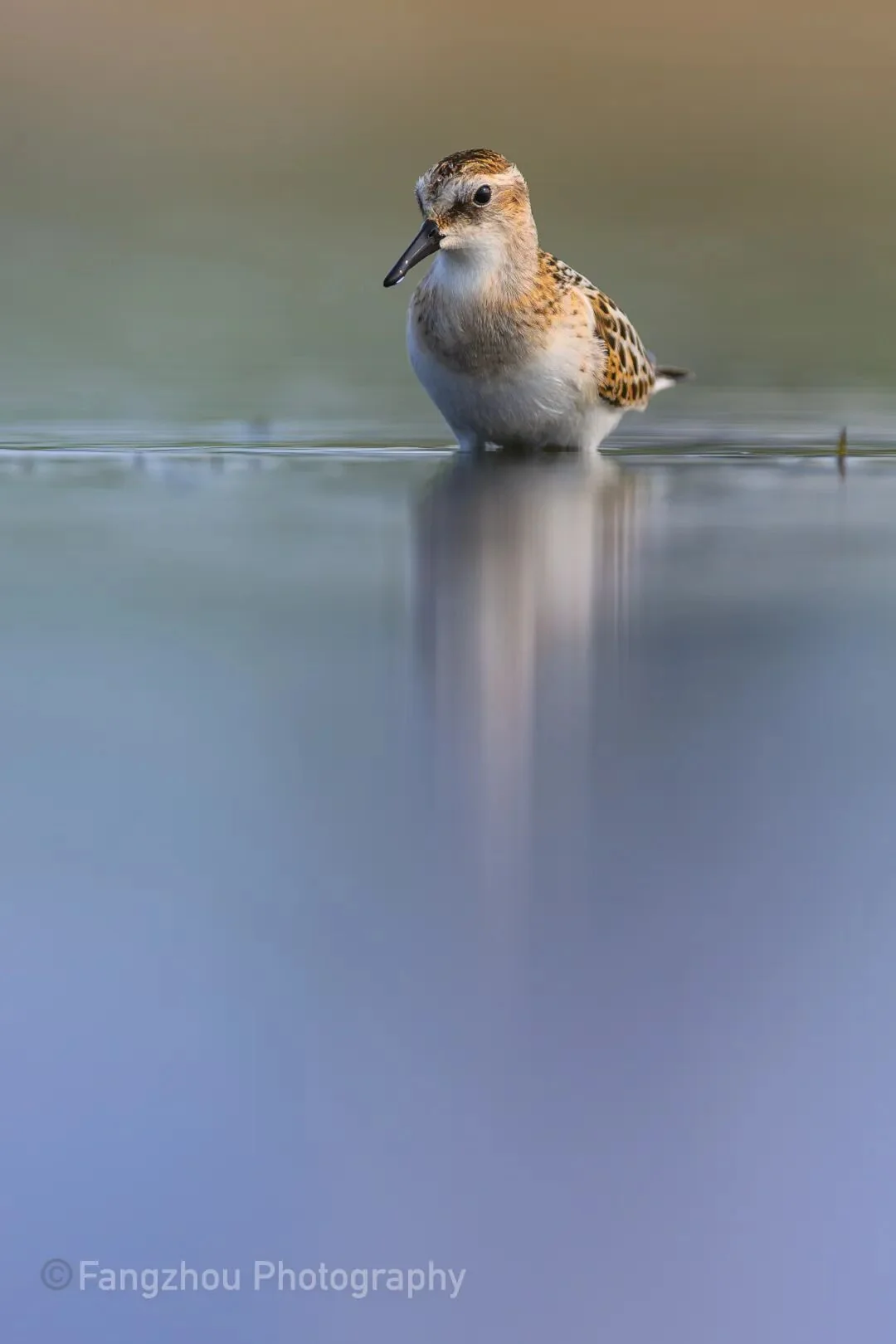
Fangzhou: Yes, but only in the past couple of years, starting in 2024. When I first became serious about bird photography, I worked from ground level and used shallow depth of field. I also took classic field-guide portraits: close, sharp, and in a standard pose. Later, I experimented with the style of Li Tianshu, also known as Samli. He uses blur beautifully and produces elegant, polished images, and I tried to learn from him. Eventually, I realized that I preferred photographs that were less soft. Even when the bird is not perfectly sharp, or strong backlighting hides its details, I prefer dramatic light and a broader view of the environment. I have recently been selecting photographs for the China Wildlife Photography Awards, and almost everything I considered worth submitting fits that description. That made my own preference very clear to me.
Aidan: Is there a nature-photography experience that stands out in your memory?
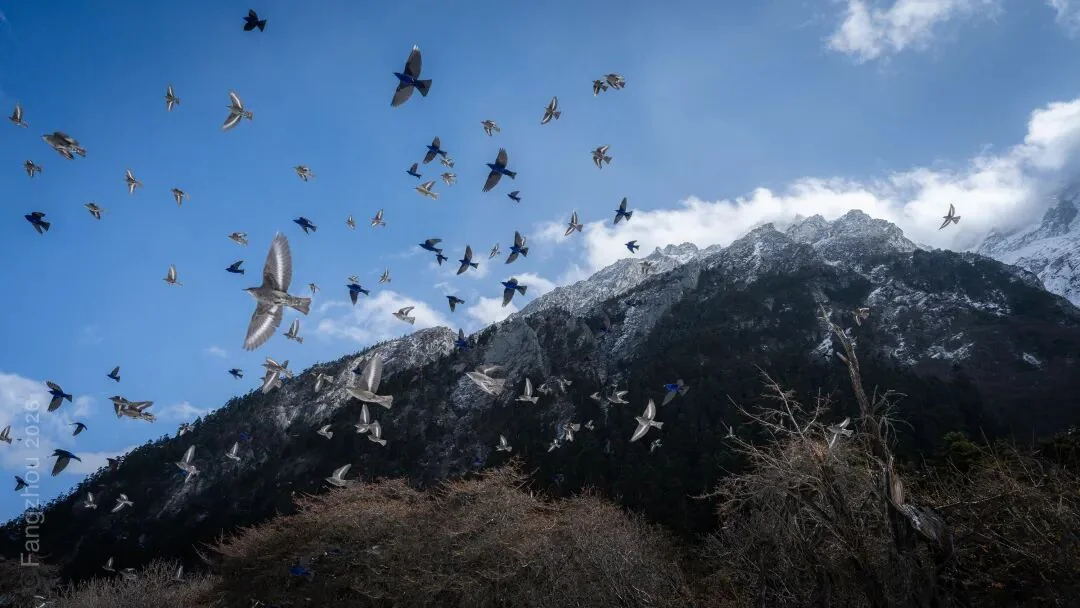
Fangzhou: The Grandalas we photographed on our trip through the Galungla Tunnel. The landscape, the scene, and the birds were all beautiful, and the photographic opportunities were exceptional. I could use both telephoto and wide-angle lenses, and I shot both stills and video. I was extremely satisfied with all of them. It is rare for every element to come together like that, and the experience has stayed with me.
Aidan: Is there a camera or lens you feel particularly attached to?
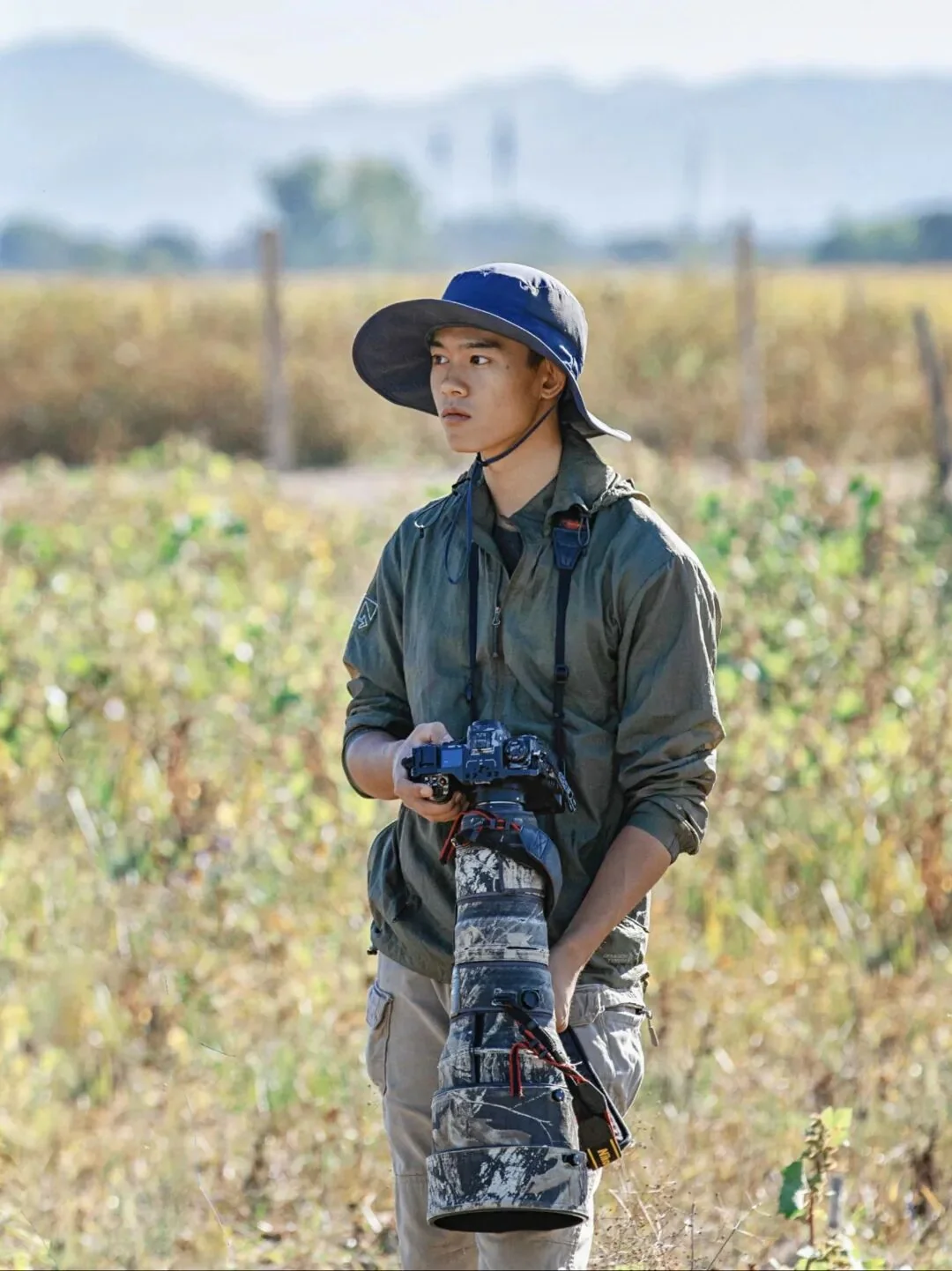
Fangzhou: I am not especially attached to most of my equipment, but if I had to choose, it would be the first-generation Nikon 400mm f/2.8. Before that, I used the Sigma 150-600mm Contemporary. I wanted better image quality and a wider aperture, and the 400mm f/2.8 was the fastest birding lens available. I did not realize how many versions existed, and my family bought a used first-generation model because it was the least expensive. It weighed over 4,800 grams and was extremely heavy, but I gradually got used to it and used it for three years. I made some good photographs and had some wonderful opportunities with it. It was with me during the pure excitement of those early days. Despite the weight, I carried it on every trip, up mountains and slowly across the mudflats at the horse ranch as I tried to get closer to a bird. That is why it means so much to me. I have since sold it and moved on to other equipment.
Aidan: How did you earn the nickname Master of Flight Shots?
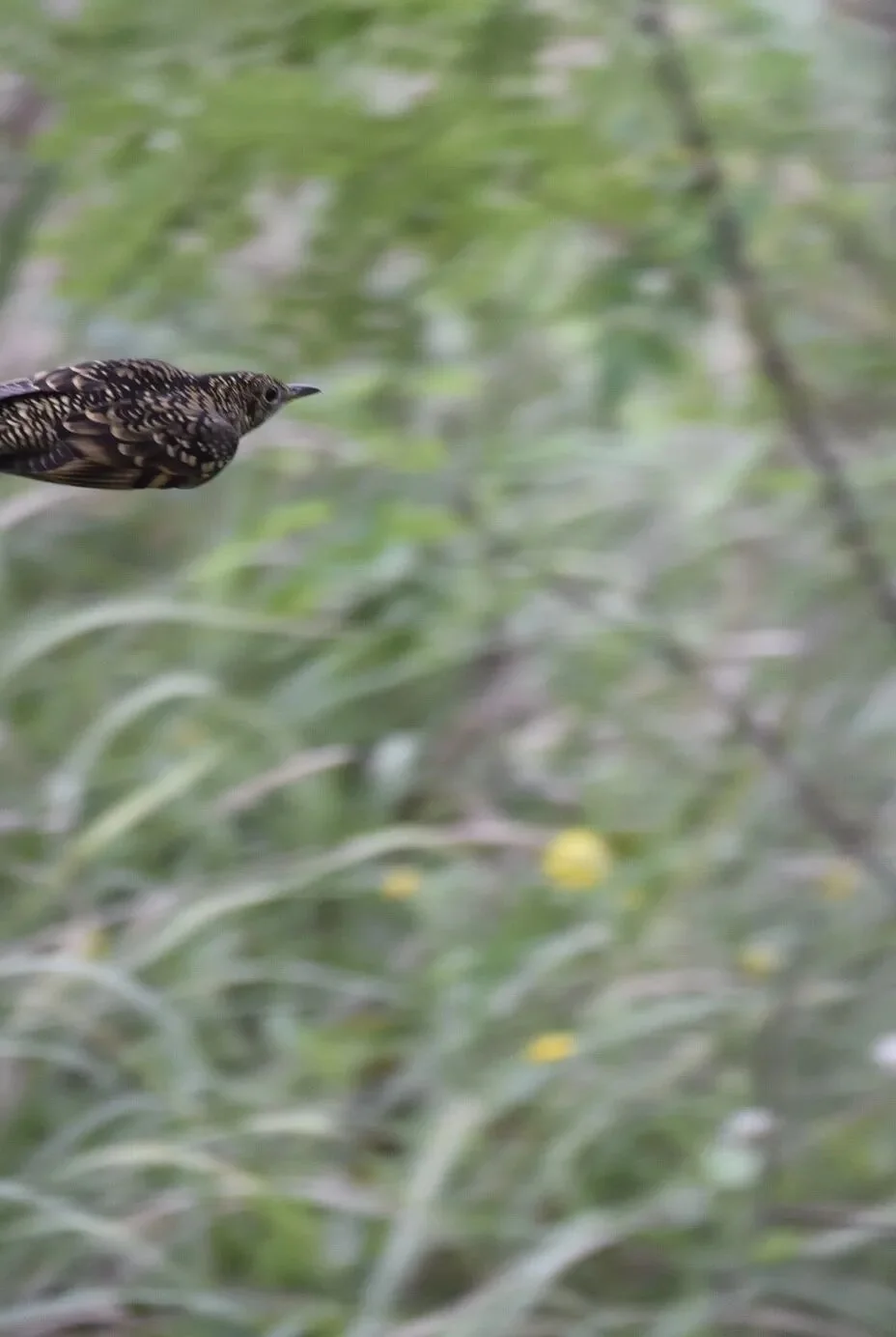
Fangzhou: During the National Day holiday in 2017, I went to Rudong with Teacher Guan, still using the 150-600mm lens. There is an area by the coast known as the Magic Forest. A Scaly Thrush was darting and flying through the trees, and I managed to photograph it in flight. Teacher Guan gave me the nickname after that. I would not say I was ever truly exceptional at flight photography, and I am much less obsessed with it now.
A decade in Beijing: birds, habitats, and birders
Aidan: How have Beijing's birds and birding community changed since 2014?
Fangzhou: In the early years, information and our understanding of Beijing's birds were limited. My clearest impression is that the number of birders suddenly increased across China, not just in Beijing. Back then, there were barely enough people to form a few birding groups. Now they are everywhere. We are seeing more species, and information travels much faster, so people can go out to chase whatever interests them. Greater attention also means more photographers and potentially more disturbance. Northern Hawk-Owls used to breed at the Summer Palace and at Peking University, but I have not heard of them breeding in urban parks, green spaces, or universities in recent years. Some good habitats have disappeared too, and urban development makes a perfect balance difficult. Overall, though, awareness of birds and conservation has improved enormously, and far more people know what birding is. When I started, there were almost no people my age except for the few in our school club. Most birders were much older. Now young people are everywhere and have become a major part of the community. Many start in first or second grade, and some parents carry their children out birding before they even start school. The community has changed just as much as the birds themselves.
Aidan: Do all the new records in Beijing over the past decade prove that the environment has improved?
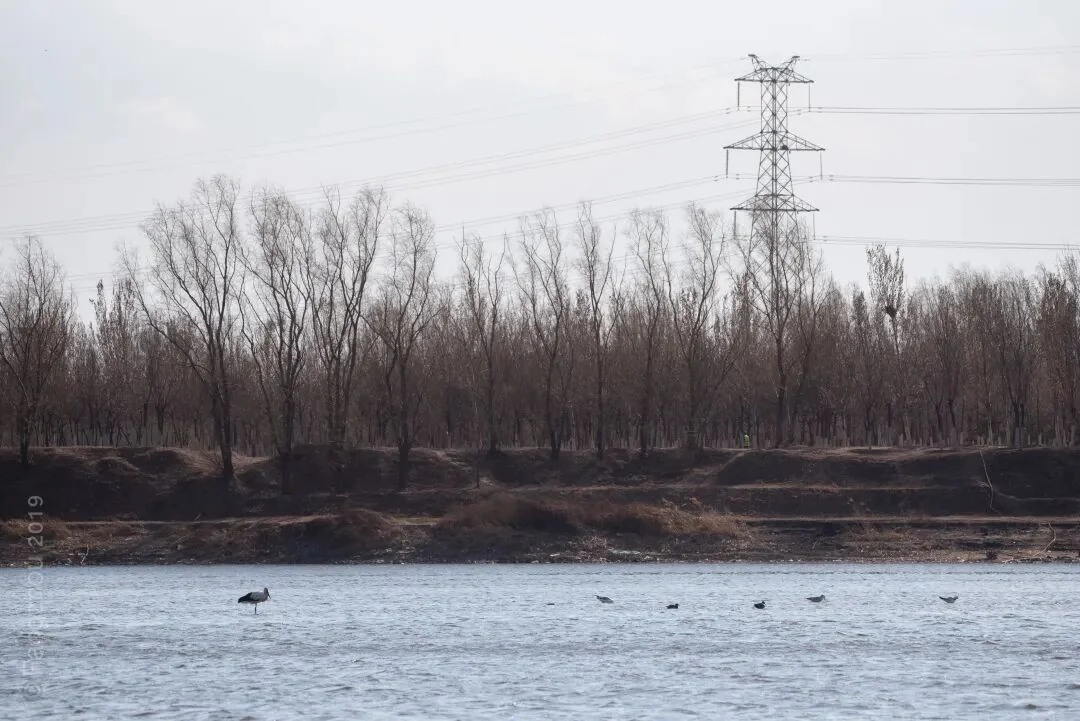
Fangzhou: I think they mainly show that there are more birders and that identification skills have improved. I would not say the environment is better overall. If anything, it is worse than ten years ago. Shahe has changed dramatically in the past five years, but ten years ago it was better, with more mudflats, lotus fields, and wetlands. Miyun Reservoir was also much better before trees were planted there. The horse ranch near Zhangguanying was flooded, and the water has only receded this year, so I do not know whether it will recover. The extent of the mudflats depends on the water level. The total area does not change, but too much or too little water is no good. Bird numbers and diversity increase only when conditions are just right.
Aidan: What problems do you see in the birding community today?
Fangzhou: One common problem is that many beginners rely too heavily on the Dongniao app and other AI identification tools. They do not study a bird's features, its field marks, or the differences between similar species. They simply accept the app's answer. Even when someone offers a correction, they insist that the app must be right. This is a relatively new problem and is discussed far less than practices such as baiting birds for photographs. Beginners now encounter these convenient tools from the very start, so it is easy to become completely dependent on them. I do not think we should rely entirely on an app to identify birds.
Aidan: What is the difference between photographing birds and birdwatching?
Fangzhou: They are different, but they also overlap. Photography aims for an excellent image. Once you find a subject, you may stay there for half a day or an entire day photographing that one bird. Birdwatching usually means walking around a park and seeing as many species as possible. The pace is different. But the two are not completely separate: you are still observing while you photograph. Birding is not only about adding species to a list. It also involves studying behavior, plumage, and other fine details, which requires long-term observation. Photography is simply another form of observation, requiring sustained concentration and often a view through the camera's viewfinder. There is no need to treat photographing birds and birdwatching as opposites.
What birding means
Aidan: How has birding changed you?
Fangzhou: It has given me something I can keep doing for the rest of my life, so I do not have to wonder what to do with myself. It has also enriched my life by introducing me to people I would never have met otherwise: birders of different ages and professions who share the same passion or work in related fields. Even when I am not deliberately birding, I notice small details that other people might miss, such as a bird calling as I walk down the street. It has made my understanding of the world richer and more three-dimensional.
Aidan: Has birding influenced your choice of major?
Fangzhou: Not significantly. My major is not directly related to birds. It focuses on photography, and I usually work on advertisements and documentaries. Birding remains a passionate hobby for me. There is some indirect influence: these projects often take me to natural environments, and sometimes I have already visited the location for birding, so I am familiar with it. The influence is usually small things like that.
Aidan: What advice would you give to beginners?
Fangzhou: Build a solid foundation and learn the birds around you first. Do not start by dreaming of traveling across China or going abroad. Those experiences can be valuable, but your local birds should come first. And do not depend too much on the Dongniao app.
Aidan: Has your original motivation for birding changed?
Fangzhou: At one stage, I was very focused on my species total and chasing new birds for my Beijing list. Later, I became less concerned with the numbers. Recently, that desire to add species has returned a little. It feels like a natural cycle that comes and goes. I also used to focus on environmental portraits and classic field-guide images: large, close, and in a standard pose. Now I care more about whether a photograph is visually compelling to me.
Aidan: What can people who know almost nothing about birds do for conservation?
Fangzhou: Ordinary people may encounter bird collisions, illegal hunting, or roadkill. They can start by reducing harm themselves, for example by driving more slowly. When they find an incident, they can report it through the roadkill or bird-collision mini programs so the data is recorded. Tencent and Beijing Forestry University have both used anti-collision stickers on their buildings. They are not bird conservation organizations, but their actions have made a real difference. As for illegal hunting, never capture birds yourself, speak up when you see it, and report it when necessary.
Aidan: Finally, in one sentence, what does birding mean to you?
Fangzhou: What does it mean? I think it is a way of life and a hobby that fills me with passion right now.
That concludes my conversation with Fangzhou Lou. Thank you for sharing your story. If you would like to share your own birding experience, please get in touch through the contact section on this site.
Comments